

Help Unpacking After a Move: Your 2026 Family Guide
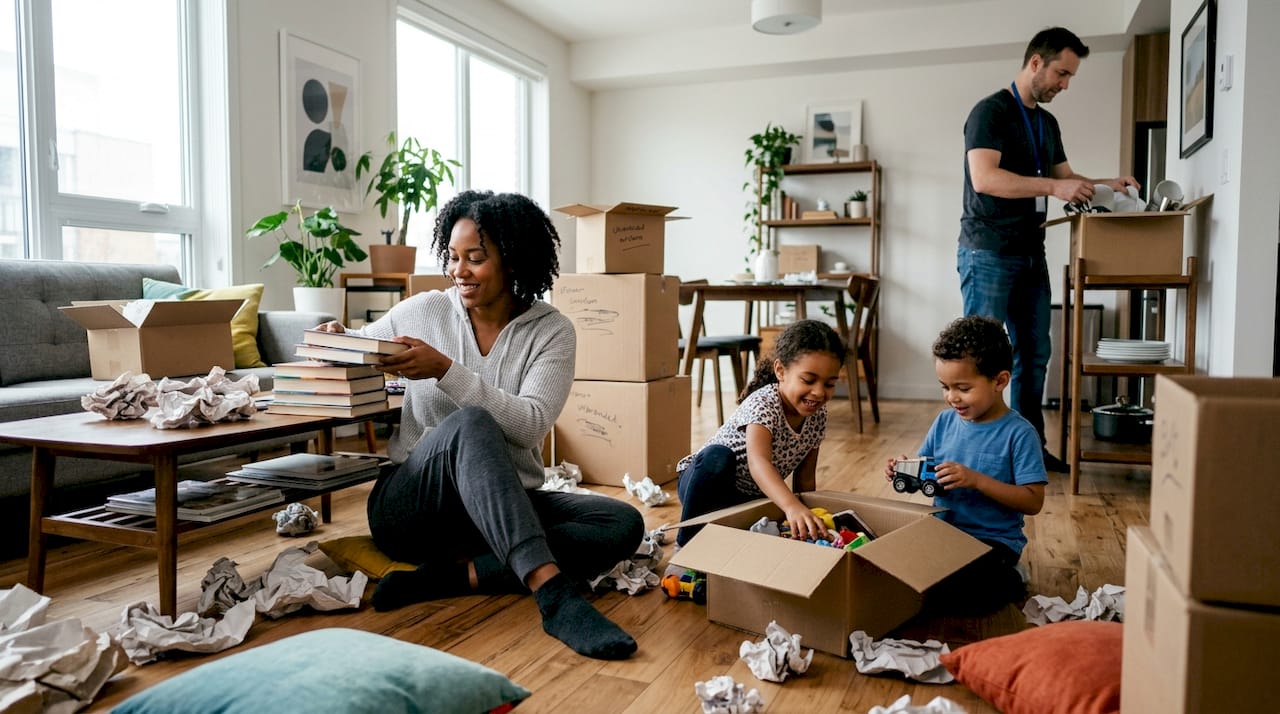
Getting help unpacking after a move is the process of systematically unpacking, organizing, and setting up your new home so it feels functional and comfortable as quickly as possible. Most households can fully unpack within 3 to 7 days using a room-by-room approach, but only when they plan ahead and prioritize the right spaces first. Families in Niagara Falls who skip this planning phase often spend weeks living out of boxes, which adds stress to an already demanding transition. The good news is that a clear system makes the entire process faster, calmer, and far more manageable.
What supplies and preparation do you need before unpacking?
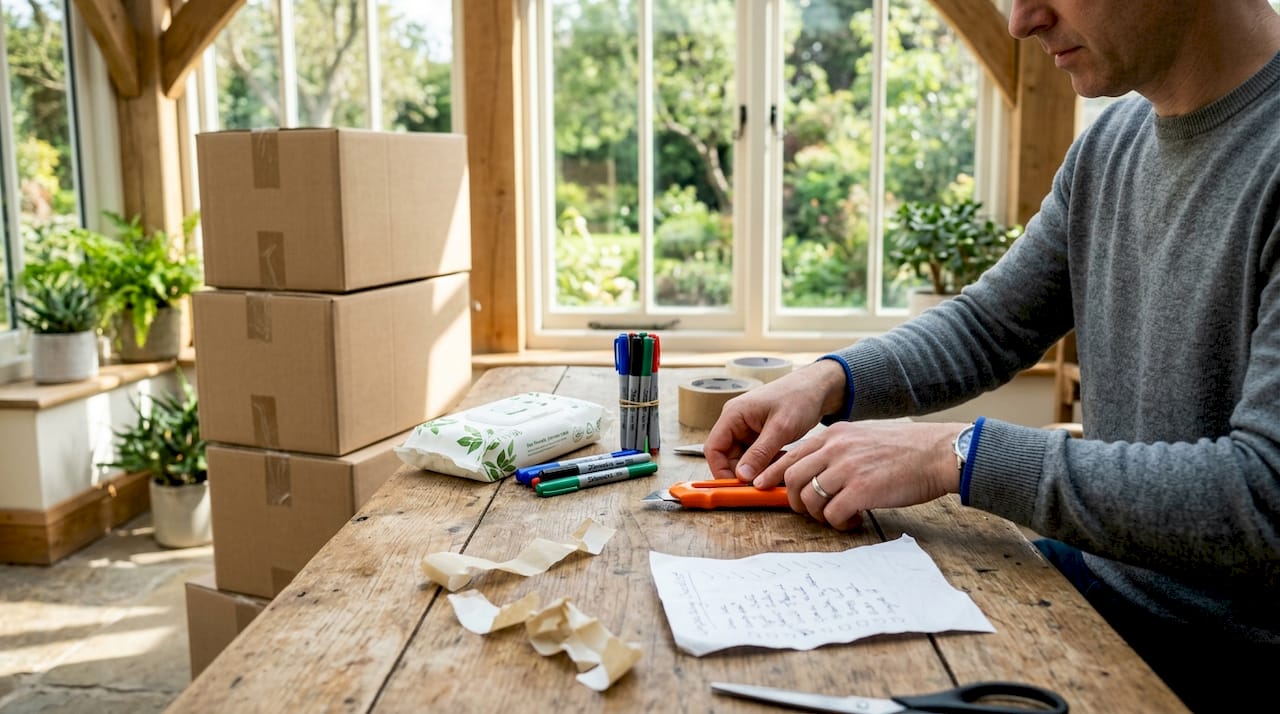
The right tools make unpacking faster and less frustrating. Gathering supplies before you open a single box saves you from stopping mid-task to hunt for scissors or trash bags.
Essential unpacking supplies:
Box cutters or scissors for opening boxes safely
Cleaning wipes and a spray bottle for wiping down shelves before placing items
Drawer organizers, shelf liners, and storage bins
Markers and labels for relabeling items as you place them
Heavy-duty trash bags for packing materials and donations
A basic toolkit (screwdriver, hammer, level) for assembling furniture
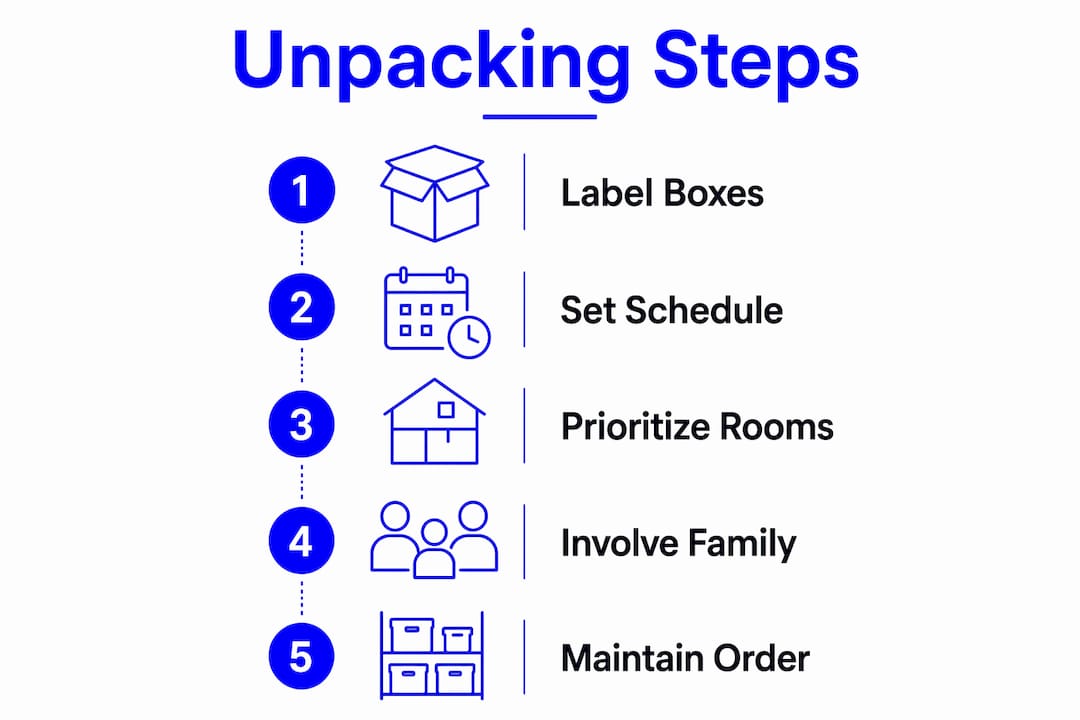
Pre-move labeling is the single biggest time-saver in post-move organization. Boxes labeled by room and contents (for example, “Kitchen: pots and pans” rather than just “Kitchen”) cut down the guesswork when you are placing items in your new space.
Pro Tip: Set a timed unpacking schedule before you start. Timed sessions of 45 minutes followed by 15-minute breaks prevent burnout and keep your energy steady across multiple days.
Supply | Purpose |
Box cutter | Opens boxes quickly without damaging contents |
Cleaning wipes | Prepares shelves and drawers before placing items |
Storage bins | Groups similar items and reduces visual clutter |
Trash bags | Manages packing materials and donation items |
Toolkit | Assembles furniture and mounts shelves |
Creating an unpacking schedule with daily goals also helps. Assign specific rooms to specific days so you always know what you are working on and when you are done for the day.
How should you prioritize rooms when unpacking after a move?
Starting with essentials such as the kitchen, bathrooms, and bedrooms makes your home livable from the very first night. Decorative rooms like the living room or home office can wait until the basics are handled.
The most effective sequencing strategy follows this order:
Essentials box first. Unpack your pre-packed overnight bag or essentials box containing toiletries, phone chargers, a change of clothes, and basic kitchen items like a coffee maker and a few dishes.
Bathrooms. Set up towels, toiletries, and toilet paper. This takes under an hour and immediately makes the home functional.
Bedrooms. Assemble beds and make them up so everyone has a place to sleep. Children’s rooms benefit from being set up early to reduce anxiety during the transition.
Kitchen. Unpack cookware, dishes, and pantry items. A working kitchen reduces the cost and fatigue of eating out every night.
Living room. Arrange seating and entertainment basics once the core rooms are done.
Storage areas and decorative spaces. Tackle closets, the garage, and decorative shelving last.
The “one-room rule” is the principle behind this sequence. Finish one room completely before moving to the next. Jumping between rooms creates visual chaos and makes it harder to track progress, which drains motivation quickly.
Organizing by function rather than by object type also speeds things up. Place everything you need for cooking near the stove, everything for sleeping near the bed, and everything for bathing in the bathroom. Function-first placement means fewer trips back and forth later.
Room | Priority level | Reason |
Bathroom | Highest | Immediate daily use |
Bedroom | Highest | Sleep quality affects everything else |
Kitchen | High | Reduces reliance on takeout |
Living room | Medium | Comfort, but not critical on day one |
Home office | Medium | Important for remote workers |
Storage areas | Low | Can wait until core rooms are done |
What is the step-by-step process for unpacking efficiently?
A clear unpacking procedure prevents the most common mistake families make: opening boxes in every room at once and finishing none of them. Follow these steps to stay on track.
Designate a staging area. Pick one spot (a hallway or garage) where all boxes land first. This keeps individual rooms clear while you work.
Bring only the relevant boxes into each room. Move boxes room by room rather than scattering them throughout the house.
Unpack from most-used to least-used. Within each room, unpack daily-use items first and seasonal or rarely used items last.
Break down boxes immediately. Breaking down boxes as you unpack each room prevents clutter from building up. Stack flat cardboard in your staging area for recycling.
Wipe surfaces before placing items. A quick wipe of shelves and drawers takes two minutes and prevents you from having to move everything later to clean.
Do a final placement check before leaving each room. Walk through the room and confirm every item has a logical home before you move on.
Pro Tip: Involve family members in age-appropriate unpacking tasks. Children can unpack their own toys and books, which gives them a sense of ownership in the new space and speeds up the overall process.
The most common mistake families make is over-organizing too early. Spending an hour arranging a bookshelf by color on day one while the kitchen is still in boxes is a productivity trap. Save detailed organization for after the basics are in place.
Pacing matters more than speed. Unpacking works best as a marathon, not a sprint, with realistic daily goals and regular breaks. Families who try to finish everything in one exhausting day typically end up with poorly placed items they reorganize for weeks afterward.
If you need help unpacking after a move near you, scheduling professional unpacking help for the day after moving day is the most effective approach. You rest on moving day, then supervise placement the following morning with fresh energy.
How do you maintain post-move organization after unpacking?
Unpacking is not the end of the process. The first few weeks in a new home reveal which storage solutions actually work and which ones need adjusting.
Key habits for lasting post-move organization:
Reassess placement after two weeks. Once you have lived in the space, you will know which items you reach for constantly and which are stored in the wrong spot. Move them before the habit sets in.
Apply the 30-day rule. Donate unopened boxes within 30 days of moving if you have not needed those items. If you did not miss them during the first month, you likely do not need them.
Create functional storage zones. Group items by how often you use them. Daily-use items go at eye level and arm’s reach. Seasonal items go in high shelves or deep storage.
Dispose of packing materials responsibly. Cardboard can be recycled curbside in Niagara Falls. Bubble wrap and foam peanuts can often be dropped off at local shipping stores for reuse.
Personalize gradually. Hang artwork and add decorative touches after the functional setup is complete. Decorating a disorganized room just hides the problem.
Decluttering after a move is one of the most underrated steps in the process. Moving is the perfect moment to let go of items that no longer fit your life or your new space. A smaller, well-organized home is easier to maintain than a larger, cluttered one.
Key Takeaways
A systematic, room-by-room unpacking process with timed work sessions and clear room priorities is the fastest way to settle into a new home comfortably and with minimal stress.
Point | Details |
Start with essentials | Unpack bathrooms, bedrooms, and the kitchen before any other room. |
Use the one-room rule | Finish each room completely before moving to the next to track progress. |
Pace with timed sessions | Work in 45-minute intervals with 15-minute breaks to prevent burnout. |
Apply the 30-day rule | Donate any box you have not opened within 30 days of moving. |
Get professional help early | Scheduling unpacking services the day after moving lets you rest and supervise. |
What I have learned from watching families unpack
I have seen a lot of moves, and the families who struggle most are not the ones with the most stuff. They are the ones who start unpacking without a plan and try to do everything at once.
The most counterintuitive lesson I have picked up is this: the first hour of unpacking should involve zero boxes. Spend that time walking through every room, measuring spaces mentally, and deciding where categories of items will live. That single hour saves three days of rearranging later.
Professional unpacking services typically complete a home in 1 to 3 days compared to a week or more doing it yourself. That is not just a time difference. That is the difference between feeling settled and feeling like you are camping in your own house.
The other thing I tell every family: do not underestimate the emotional weight of unpacking. Moving is physically and mentally draining. Unpacking represents the start of truly living in your new home, and treating it as a planned phase rather than an afterthought changes the entire experience. Give yourself permission to pace it over several days. Your home will feel better for it, and so will you.
— Natalie
How Atlaskings supports your move in Niagara Falls
Atlaskings is a family-run moving and delivery service based at 4635 Queen Street in Niagara Falls. Since 2021, the team has completed over 500 moves with transparent, itemized pricing and no hidden fees.

For families who need assistance unpacking boxes after relocation, Atlaskings offers in-home delivery and setup that covers everything from furniture placement to room-by-room organization. The team also provides a unique ADHD Reset service for clients who need structured help decluttering and organizing a space from scratch. Whether you need a full unpacking service or just a few hours of extra hands, Atlaskings builds a plan around your schedule. Book your service directly online to get started.
FAQ
How long does unpacking after a move typically take?
A systematic, room-by-room approach allows most households to fully unpack in 3 to 7 days. Home size and the amount of items packed are the two biggest factors.
What rooms should I unpack first?
Unpack bathrooms, bedrooms, and the kitchen first. These rooms make your home livable from day one and reduce the stress of the first few nights.
Is professional unpacking help worth it?
Professional unpacking services complete a home in 1 to 3 days compared to a week or more on your own. The time saved and the reduction in exhaustion make it a practical choice for busy families.
What is the 30-day rule for unpacking?
The 30-day rule means donating any box you have not opened within 30 days of moving. If you did not need those items in the first month, they are likely candidates for donation or disposal.
How do I avoid burnout while unpacking?
Work in timed sessions of 45 minutes followed by 15-minute breaks. Setting realistic daily goals and involving family members in age-appropriate tasks also keeps energy and motivation steady.
Recommended
Comments